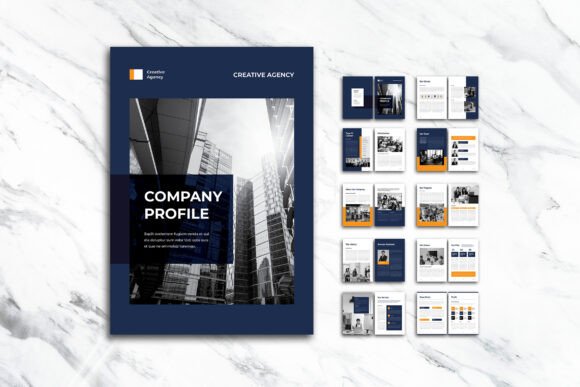
Evaluating the Blue Orange Modern Company Profile Template for Your Business Needs
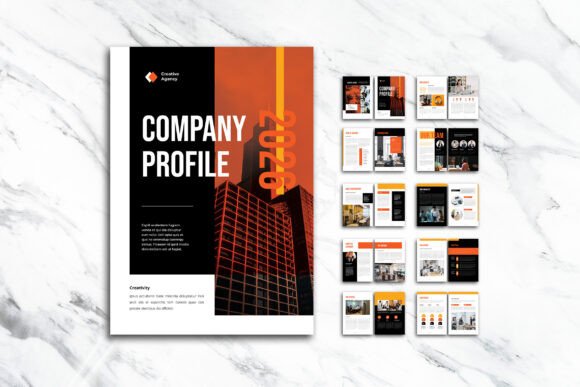
When presenting a business to potential clients, investors, or partners, the quality of your printed or digital materials often shapes first impressions before a single word is spoken. The Blue Orange Modern Company Profile is a ready-made layout template designed for Adobe InDesign, offering a structured yet visually flexible foundation for company profiles, capability statements, and portfolio documents. It provides a complete A4-sized document with twelve custom pages, including front and back covers, built around a modern aesthetic that balances imagery, infographics, and text.
This article examines the template from a practical standpoint, helping you understand its structure, strengths, limitations, and the types of projects where it may or may not be the right choice. Rather than simply describing features, the goal here is to support an informed decision about whether this layout aligns with your communication objectives and workflow.
What the Blue Orange Modern Company Profile Template Offers
At its core, the Blue Orange Modern Company Profile is a twelve-page InDesign document formatted to A4 dimensions (29.7 cm by 21 cm). It ships in both INDD and IDML formats, accommodating different versions of Adobe InDesign, and includes a PDF version for quick reference. The template uses a CMYK color space with 300 DPI resolution and a 3 mm bleed, meeting standard print production requirements out of the box.
The design direction emphasizes clean geometry and a restrained blue-and-orange color palette, which gives the layout a contemporary, professional feel without appearing overly trendy. Smart layers and neatly organized layer structures are implemented to streamline the editing process, allowing users to replace placeholder content with their own text, images, and data visualizations efficiently.
Typography relies on free fonts available through DaFont or Google Fonts, removing the need for additional typeface purchases. This is a practical consideration for teams working within budget constraints or those who prefer open-source font solutions. It is worth noting that the images shown in preview materials are for demonstration only and are not bundled with the download, a standard practice among template marketplaces that users should anticipate.
Why This Template Attracts Interest
Several factors contribute to the appeal of this particular company profile layout. Understanding these motivations helps clarify whether your own reasons for considering it are well-founded.
Visual Cohesion with Minimal Design Effort
Many businesses lack in-house graphic design expertise yet recognize the importance of polished presentation materials. The Blue Orange Modern Company Profile addresses this gap by providing a professionally composed layout where the heavy lifting of typographic hierarchy, color harmony, and spatial balance is already resolved. For a small marketing team or a solo entrepreneur, this translates into significant time savings and a reduced likelihood of design missteps.
Integration of Infographics and Imagery
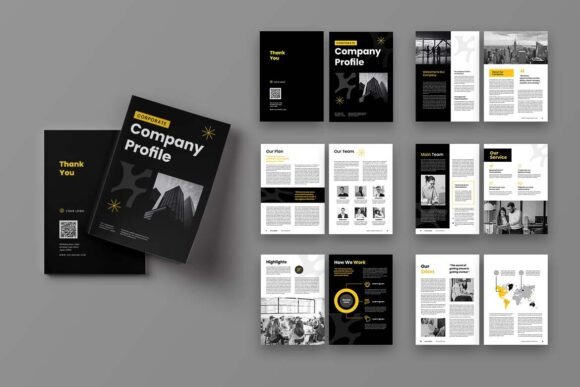
The template is built to accommodate infographics alongside photographs and text blocks. This mixed-media approach is valuable for company profiles that need to communicate data points, growth metrics, service breakdowns, or process flows visually. Rather than treating charts as afterthoughts, the layout appears to position them as integral design elements, which can elevate the perceived sophistication of the final document.
Print-Ready Specifications
With CMYK formatting, 300 DPI resolution, and properly set bleed margins, the template meets the technical requirements of commercial printers. This reduces the friction often experienced when preparing files for professional printing, particularly for users who may not be deeply familiar with prepress specifications. The A4 dimensions also suit international markets where this paper size is the norm.
Practical Benefits and What They Mean in Use
Beyond the listed features, there are tangible benefits that emerge during actual use of the template. Evaluating these in context helps set realistic expectations.
- Faster turnaround on company profile projects — Starting from a structured template rather than a blank page can reduce production time from days to hours, especially when content is already prepared.
- Consistency across pages — The twelve-page structure ensures that typography, spacing, and color application remain uniform, reinforcing brand coherence without requiring manual checks on every page.
- Reduced decision fatigue — With layout grids and stylistic choices already made, users can focus on content adaptation rather than debating design fundamentals.
- Flexibility within a defined framework — Smart layers allow for customization without breaking the underlying structure, striking a balance between creative freedom and guided constraints.
- Cost-effective compared to custom design — For organizations that cannot justify the expense of a bespoke agency-designed profile, a template offers a middle ground between doing it entirely from scratch and commissioning original work.
Tradeoffs and Limitations to Consider
No template suits every situation, and the Blue Orange Modern Company Profile carries certain tradeoffs that merit honest consideration before committing to it.
Color Palette Constraints
The blue and orange palette, while modern and distinctive, may not align with every existing brand identity. While InDesign allows color modifications, altering a deeply integrated palette across twelve pages can require substantial effort. If your brand relies on a significantly different color scheme, the adaptation process may offset some of the time savings the template is meant to provide.
Fixed Page Count and Structure
Twelve pages represent a specific scope. For businesses needing a concise four-page overview or an expansive twenty-page document, this fixed length may feel restrictive. Expanding or reducing the page count demands additional layout work, potentially introducing inconsistencies if not handled carefully. The template works best when twelve pages genuinely match the storytelling needs of the content.
Image Sourcing Responsibility
Since preview images are not included, users must source their own photography, illustrations, and graphics. This is standard practice but worth acknowledging, especially if the template's visual appeal relies heavily on high-quality imagery in its previews. The final output depends significantly on the quality of the replacement images selected.
Software Dependency
Adobe InDesign is the required editing environment. While IDML format broadens compatibility across InDesign versions, users without access to the software or those unfamiliar with its interface may face a learning curve. Alternatives like Canva or PowerPoint-based templates exist for those who prefer different ecosystems, though they typically offer less print precision.
Scenarios Where This Template Is a Strong Fit
Certain use cases align particularly well with the strengths of this layout. Recognizing these situations can clarify whether your project falls into a high-fit category.
Startups and growing businesses preparing their first formal company profile often benefit from the template's balance of professionalism and approachability. The infographic-friendly design helps translate early-stage metrics and milestones into compelling visual narratives without requiring a dedicated design team.
Creative agencies and service providers that want to showcase portfolios alongside capability descriptions will find the mixed-media layout accommodating. The structure supports a rhythmic alternation between project imagery and explanatory text, which suits industries where visual proof of work carries significant weight.
International trade and B2B contexts where A4 formatting is standard also represent a natural fit. The template's dimensions and print specifications align with expectations in European, Asian, and other markets that operate on A-series paper sizes, minimizing reformatting needs.
Time-sensitive projects such as event collateral, investor pitch documents, or last-minute tender submissions can leverage the template's ready-made structure to produce a polished document under tight deadlines.
When Alternatives May Be Worth Exploring
There are circumstances where this template, despite its qualities, may not be the optimal choice. Being aware of these helps avoid mismatched expectations.
If your brand identity relies on a radically different aesthetic—minimalist monochrome, maximalist color expression, or highly illustrative styles—the foundational design language of the template may require more reworking than starting from a neutral base or commissioning custom work.
Organizations with extensive content that cannot be condensed into twelve pages may find the fixed structure constraining. While pages can be added, doing so while maintaining design integrity demands InDesign proficiency that not all users possess. In such cases, a more modular template or a bespoke design may serve better.
Teams operating without Adobe InDesign access should evaluate whether the investment in software is justified for this single project. Web-based alternatives may offer sufficient quality for digital-first profiles, though print output may suffer by comparison.
Additionally, businesses that need frequent, ongoing updates to their company profile might find a template-based approach cumbersome over time. If data, team members, or case studies change regularly, a more dynamic solution—such as a templated web page or a slide deck—could prove more practical than repeatedly editing a twelve-page InDesign document.
Key Considerations Before Making a Decision
Choosing a company profile template involves weighing several practical factors beyond aesthetic preference. The following considerations can guide your evaluation process and help determine whether the Blue Orange Modern Company Profile aligns with your needs.
Assess Your Content Readiness
A template accelerates layout but does not generate content. Before purchasing or downloading, confirm that your copy, data points, and imagery are prepared or can be produced in a reasonable timeframe. The template's infographic elements are placeholders that require meaningful input to fulfill their purpose. Having content ready before design begins maximizes the template's efficiency advantage.
Evaluate Your InDesign Proficiency
While the template is marketed as easy to use, baseline familiarity with InDesign's interface and tools will make the editing process smoother. Tasks like replacing placeholder images, adjusting text frames, and exporting with correct print settings are manageable for intermediate users but may frustrate complete beginners. Consider whether you have the skills in-house or access to someone who does.
Consider the End Medium
Think about where the finished profile will live. If it will be printed professionally, the template's CMYK and bleed specifications are valuable. If it will primarily be distributed as a PDF via email or download, screen optimization and file size become more relevant. For purely digital use, you might also evaluate interactive PDF features or alternative formats, though the template's strengths lie in print and static digital presentation.
Plan for Brand Adaptation
Estimate the effort required to adapt the template's color palette, typography, and imagery to your brand. Minor adjustments are typically straightforward; comprehensive overhauls may diminish the template's time-saving promise. If the existing blue and orange scheme can be shifted toward your brand colors without disrupting the design's integrity, the template remains practical. If not, the adaptation burden rises.
Making a Confident Choice
The Blue Orange Modern Company Profile template occupies a useful position in the spectrum of design resources—more structured than a blank canvas, more flexible than a rigid template, and more accessible than custom agency work. Its twelve-page A4 format, infographic integration, and print-ready specifications make it a practical option for businesses that need a professional company profile with reasonable turnaround time and budget.
That said, its value depends entirely on how well it matches your specific context. Companies with compatible brand aesthetics, content that fits the page structure, and access to InDesign will likely find it a worthwhile investment. Those with divergent needs may benefit from exploring alternatives or approaching the project from a different starting point.
Ultimately, the template is a tool—one that performs best when chosen with clear-eyed awareness of both its capabilities and its constraints. By evaluating your content, skills, brand requirements, and distribution plans against what this layout offers, you can determine whether it deserves a place in your communication toolkit.